The Geopolitical Reroute: Why ASEAN Asset Repositioning is Urgent
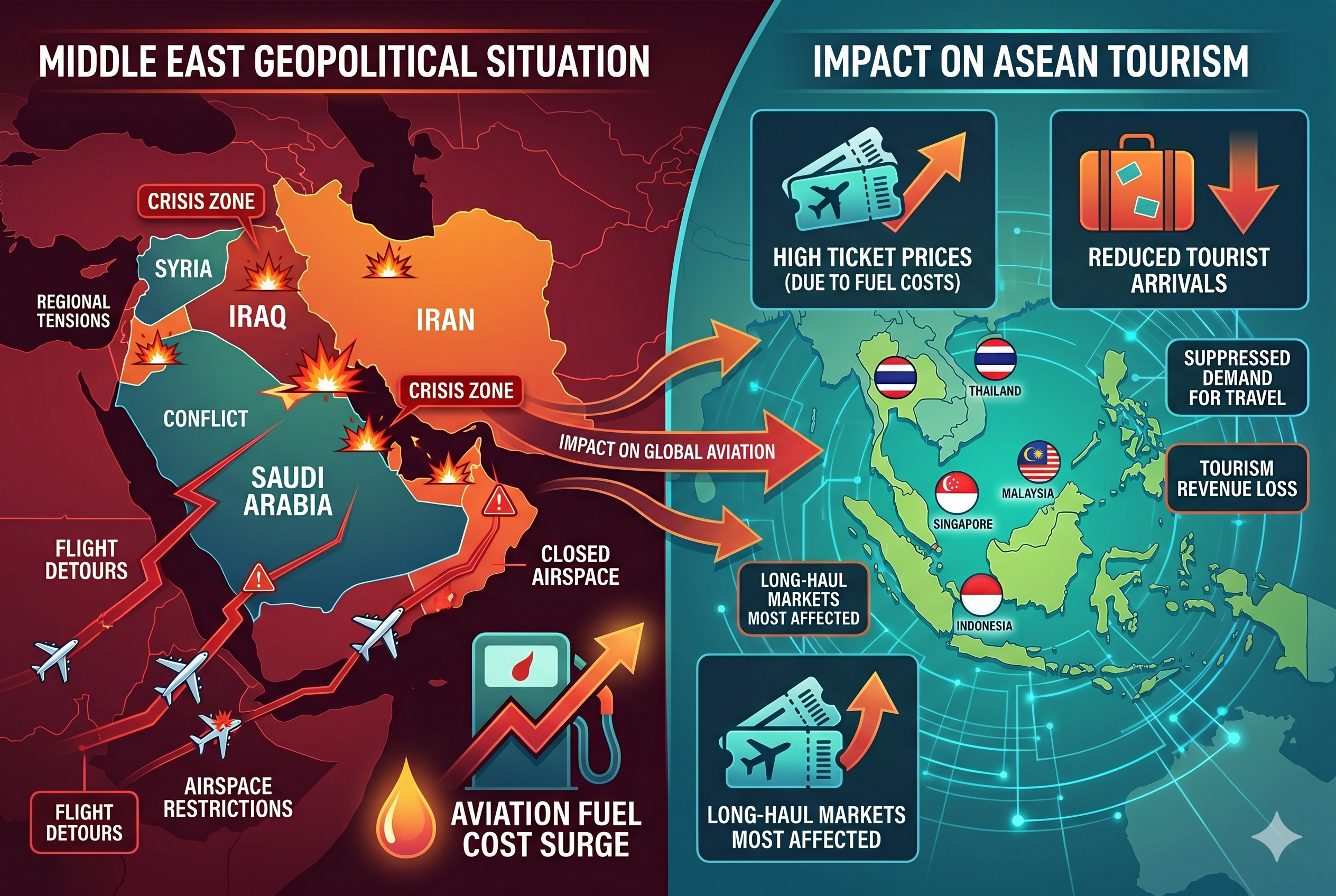
The geopolitical realities in the Middle East are fundamentally rewiring global travel flows this quarter, and the impact on the Southeast Asian hospitality pipeline is immediate. And we have no indication yet as to how long this will last.
With airspace restrictions and fuel costs disrupting major transit hubs like Dubai and Doha, the traditional "Long-Haul European" pipeline into ASEAN is facing severe bottlenecks. We are seeing major destinations across Cambodia, Thailand, and Malaysia acknowledge this shift as early Q2 data reflects the disruption.
However, a massive secondary effect is emerging: ASEAN is solidifying as the ultimate "Geopolitical Buffer." With European travel becoming more expensive and logistically complex for Asian outbound markets, capital that would traditionally flow to Europe is staying within the region. We are seeing an aggressive pivot—backed by national ministries—toward high-performing, short-haul markets like China, India, and South Korea to fill the gap.
But here is the operational friction that the macro-reports missed: You cannot simply swap a European guest for a regional guest without bleeding margin.
Historically, long-haul European guests booked further out, stayed longer (10-14 days), and had specific and higher F&B consumption patterns. Replacing one 14-day booking with four 3-day regional bookings completely alters your operational P&L. Housekeeping costs spike, wear-and-tear accelerates, and F&B utilization shifts entirely.
We are experiencing all of these unfold within our properties in RIYAZ Group as well as anticipating a shift for the upcoming Metropolo Luang Prabang in Laos, a Jin Jiang Hotel managed by us.
Digging deeper, for assets built for 2019 European travel patterns, it is structurally inefficient for the 2026 short-haul surge. Protecting GOPPAR right now possibly requires re-strategizing:
F&B Overhauls: Transitioning from passive, long-leisure dining to high-turnover, culturally integrated culinary experiences that appeal to the Asian luxury traveler.
Service Pacing: Re-training localized talent to handle the hyper-connected, high-frequency demands of regional guests.
Agile Distribution: Bypassing the heavy OTA reliance required for long-haul markets by building direct, localized sales channels in neighboring countries.
The region remains a global safe haven, but capturing that diverted value requires ruthless operational agility. Well this is given in any case, but could there be more opportunities?